The Medical System That Refused to Disappear: Why Homeopathy Still Exists After More Than 200 Years
If someone had told a doctor in 1810 that people would still be debating homeopathy in the 21st century, they probably would have laughed. After all, medicine has changed almost beyond recognition since then.
When Samuel Hahnemann published The Organon of Medicine in 1810, Napoleon was still ruling much of Europe. Doctors didn’t know that bacteria caused disease. There were no antibiotics, no X-rays, no MRI scanners, and no organ transplants.

Back then even a minor infection could become life-threatening. Over the next two centuries, medicine would go through one revolution after another. Entire diseases would become treatable. Surgical procedures that once seemed impossible would become routine. Technologies would emerge that could look inside the human body without making a single incision. And yet, through all of those changes, homeopathy remained. That’s what makes its history so interesting. The story of homeopathy isn’t simply about medicine. It’s about survival. History is full of healthcare movements that once seemed important and then disappeared. Some attracted huge numbers of followers. Some built colleges, hospitals, and professional organizations. Many believed they represented the future of medicine. Today, most of them are forgotten. Homeopathy isn’t.
What’s even more surprising is that it has survived despite decades of criticism. For generations, critics have predicted that advances in science and modern medicine would eventually make homeopathy irrelevant. Yet hundreds of millions of people around the world continue to use it. Whether you see that as evidence of therapeutic value, cultural tradition, patient preference, or something else entirely, it raises a fascinating question:
Why did homeopathy survive when so many other medical systems disappeared?
A Doctor Who Challenged Convention
To answer that question, we need to go back to the late 1700s. It’s hard for us to imagine today, but medicine could be a frightening experience. If you became seriously ill in Europe around 1800, your doctor might recommend bloodletting, where large amounts of blood were removed from the body. Purging and vomiting treatments were common. Mercury-based medicines were widely used despite their toxic effects. Many doctors genuinely wanted to help their patients. The problem was that medicine simply didn’t have many effective tools. Samuel Hahnemann found this deeply frustrating.
Born in Germany in 1755, he trained as a physician but became increasingly dissatisfied with the medical practices of his day. At one point he largely stepped away from clinical practice and supported himself through translation work, translating medical and scientific texts from several languages. The more he studied medicine, the more convinced he became that there had to be a better way. In 1796, he published ideas that would later become the foundation of homeopathy. Fourteen years later, in 1810, he brought those ideas together in The Organon of Medicine. At the time, nobody could have predicted how far those ideas would travel.
The Cholera Epidemics That Changed Everything
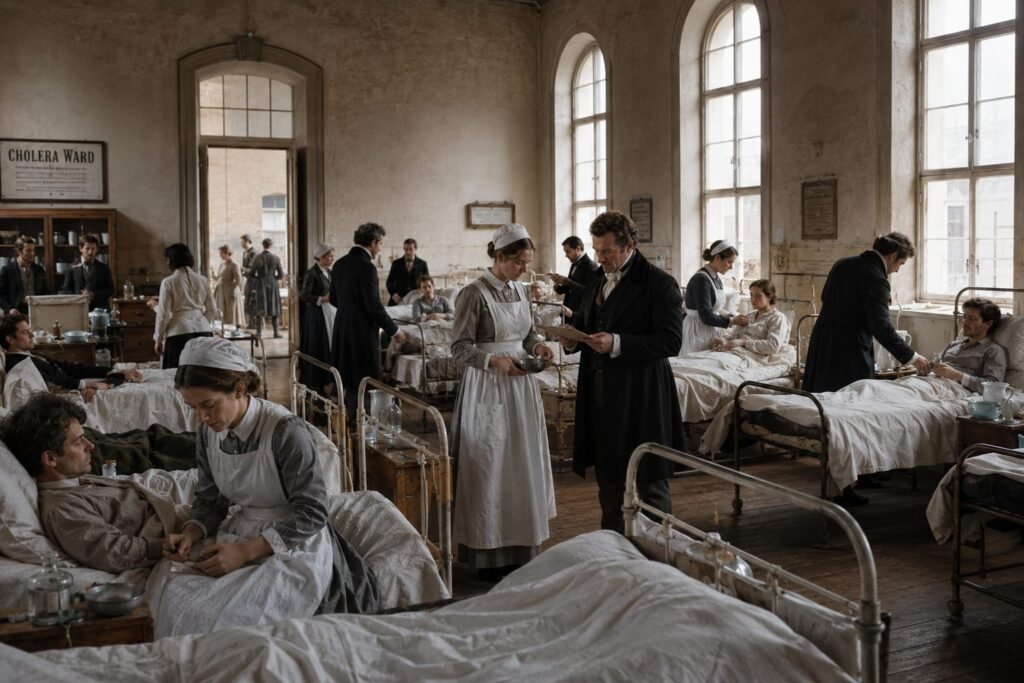
Homeopathy’s reputation grew significantly during the cholera epidemics of the 19th century, when several hospital reports and government-collected statistics recorded lower mortality rates among patients treated by homeopathic physicians than those treated in many conventional hospitals. Records submitted to the General Board of Health during the 1854 London outbreak reported a mortality rate of approximately 18% at the London Homeopathic Hospital, compared with about 46% across conventional London hospitals. These figures attracted considerable public attention and helped fuel the rapid spread of homeopathy during the era. However, the results were also the subject of debate. Critics questioned whether differences in patient populations, diagnostic standards, and record-keeping practices may have influenced the outcomes. Historians have also noted that conventional cholera treatments of the time often included bloodletting, mercury compounds, and other interventions now considered harmful, while homeopathic physicians generally avoided such practices. As a result, while there is no historical consensus that homeopathy itself was proven to cure cholera, many scholars agree that the reported outcomes contributed significantly to homeopathy’s growing popularity and public acceptance throughout the 19th century.
From a historical perspective, something important happened. People heard about it, newspapers reported the figures, and patients talked about them. Doctors argued about them. And suddenly, homeopathy was no longer a small movement known only to a handful of practitioners. It was being discussed across Europe and beyond.
A Medical Movement Goes Global

What happened next surprised almost everyone. Homeopathy spread rapidly throughout Europe, North America, Latin America, and parts of Asia. And it wasn’t just individual practitioners opening clinics. Homeopaths built institutions. They founded medical schools, They launched journals, They established professional associations, They opened pharmacies, they built hospitals.
One of the most surprising facts about homeopathic history is just how large the movement became. By the late 19th century, the United States had more than 20 homeopathic medical schools and over 100 homeopathic hospitals. Homeopathy is often portrayed as something that existed outside mainstream medicine. But for a period in the 19th century, it was a significant part of the medical landscape. There were homeopathic colleges training doctors, homeopathic hospitals treating patients, and homeopathic organizations influencing public discussions about healthcare. This wasn’t a tiny fringe movement, It had become a serious force. Millions of people used it worldwide.
The Royal Connection
Homeopathy’s growth wasn’t limited to ordinary patients. In Britain, one of its earliest champions was a physician named Frederick Hervey Foster Quin. After studying homeopathy in Europe, Quin introduced it to Britain and helped establish some of the country’s earliest homeopathic institutions. Over time, homeopathy attracted support from influential families, aristocrats, and public figures.
Perhaps most famously, it developed a long-standing association with the British royal family. That connection has helped keep homeopathy in the public eye for generations and remains one of the most widely discussed aspects of its history.
Why Didn’t It Disappear Like Everything Else?
Homeopathy wasn’t the only alternative medical movement of the 1800s. In fact, it had plenty of company. There was Thomsonian medicine, There was Eclectic medicine, There was Physiomedicalism.
Some of these movements attracted enormous numbers of followers. They opened schools, trained practitioners, and built professional organizations. For a while, they looked every bit as successful as homeopathy. Then they faded away. Today, most people have never heard of them. Homeopathy survived. Why? That’s the real mystery.
The Fight for Medicine’s Future
By the late 1800s, homeopaths and conventional doctors were often competing directly with one another. The debates could be fierce. Medical journals criticized rival approaches. Professional organizations argued about standards and qualifications. Hospitals sometimes refused privileges to physicians from competing schools of medicine. This wasn’t just a scientific disagreement. It was a battle over who would shape the future of healthcare. For several decades, different visions of medicine existed side by side.
The Century That Changed Medicine
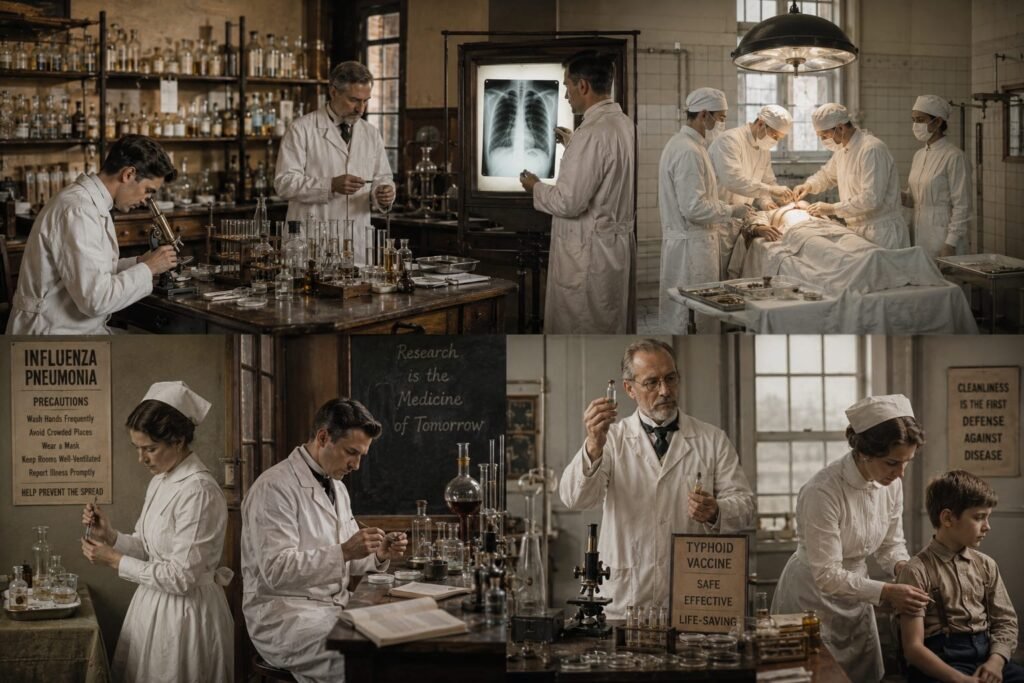
The early 20th century transformed healthcare. New discoveries arrived at an astonishing pace. Vaccine manufacturing began. X-rays revolutionized diagnosis. Insulin changed the treatment of diabetes. Antibiotics transformed the treatment of infectious disease. Surgery became safer and more successful. Conventional medicine was achieving results that previous generations could hardly have imagined.
As science advanced, healthcare systems increasingly focused on biomedical approaches. Medical education also became more standardized. In the United States, the Flexner Report of 1910 helped reshape medical training and contributed to the closure or consolidation of many medical schools, including numerous homeopathic institutions. To many observers, homeopathy’s future looked uncertain. Some believed it would eventually disappear altogether. But that isn’t what happened.
The Prediction That Never Came True
While homeopathy declined in some countries, it remained strong in others. India is perhaps the most striking example. Introduced during the 19th century, homeopathy gradually became woven into the country’s healthcare system. Government recognition, educational institutions, professional regulation, and strong public interest all helped it grow. Today, India has one of the largest homeopathic communities in the world. Homeopathy also maintained a presence in countries such as Germany, Brazil, Argentina, Mexico, Switzerland, and the United Kingdom. Its role differs from country to country, but it never vanishes. And that’s what makes the story so unusual. Many people predicted homeopathy would fade away. Instead, it adapted.
Why Do People Still Use It?

This question is at the centre of nearly every modern discussion about homeopathy. Supporters and critics often disagree about the answer. Some patients appreciate the time and attention they receive during consultations. Others like approaches that focus on the whole person rather than a single diagnosis. Many people use homeopathy alongside conventional medicine rather than instead of it. Cultural traditions, family experiences, personal beliefs and individual experiences all play a role. People may disagree about how these factors should be interpreted, but people keep coming back to homeopathy. They have for more than 200 years.
More Than a Medical Story
It’s easy to think of homeopathy as simply a debate about remedies or healthcare. But its history tells a bigger story. It’s a story about how people choose their healthcare. It’s a story about how ideas spread. It’s a story about how some traditions survive while others disappear. Most medical systems from the early 1800s are now history. Homeopathy isn’t. Whether you see that as evidence of therapeutic value, cultural resilience, patient preference, historical momentum, or some combination of all four, its survival is remarkable. After more than two centuries, the most interesting question is no longer why homeopathy appeared. The most interesting question is why it never went away.
Interested in how homeopathy is practiced today?
Learn what happens during a modern homeopathic consultation:
https://homeo-path.com/what-happens-during-a-homeopathic-consultation/