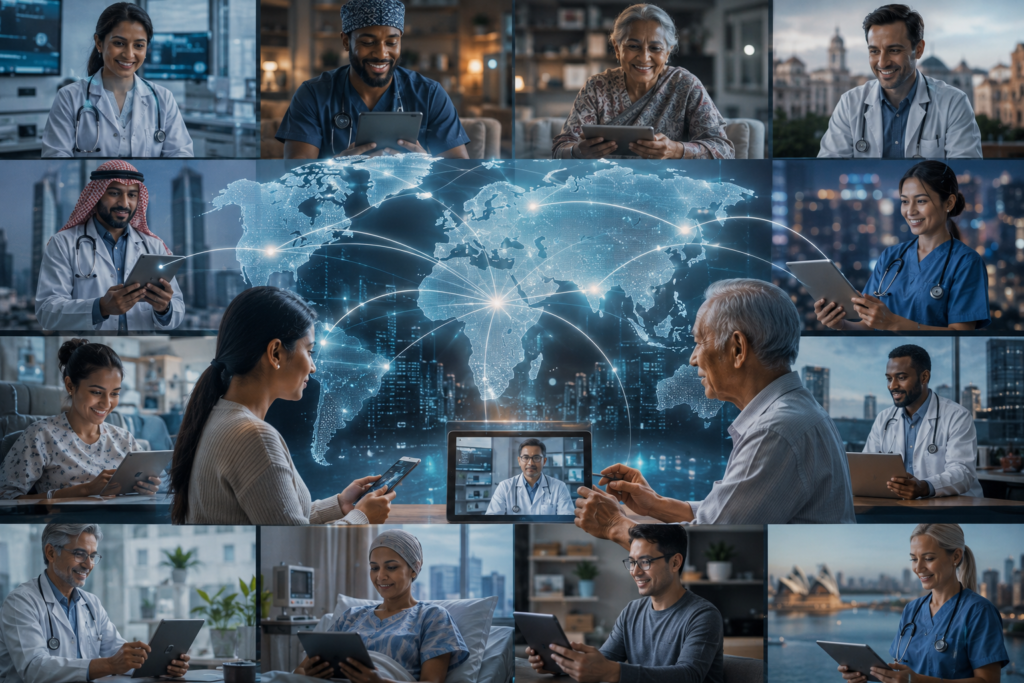
Most people assume their healthcare system is normal.
Not because they have studied healthcare systems around the world, but because the system they grew up with feels familiar. If you were raised in the United States, you may think it is perfectly natural to visit a primary care physician, receive referrals to specialists, and rely on a healthcare system dominated by conventional medicine. If you grew up in China, you may be accustomed to seeing Traditional Chinese Medicine and conventional medicine practiced side by side. If you were raised in India, the idea of choosing between multiple healthcare traditions may seem entirely ordinary.
The longer one looks at healthcare around the world, the harder it becomes to define what “normal” actually means.
What becomes clear instead is that every society develops its own understanding of health, illness, healing, and the role of the practitioner. These ideas are shaped by history, culture, geography, religion, economics, and centuries of accumulated experience.
Modern medicine has transformed human health in remarkable ways. Yet it exists alongside many other healthcare traditions that continue to influence the lives of billions of people around the world.
China: Two Thousand Years of Medical History
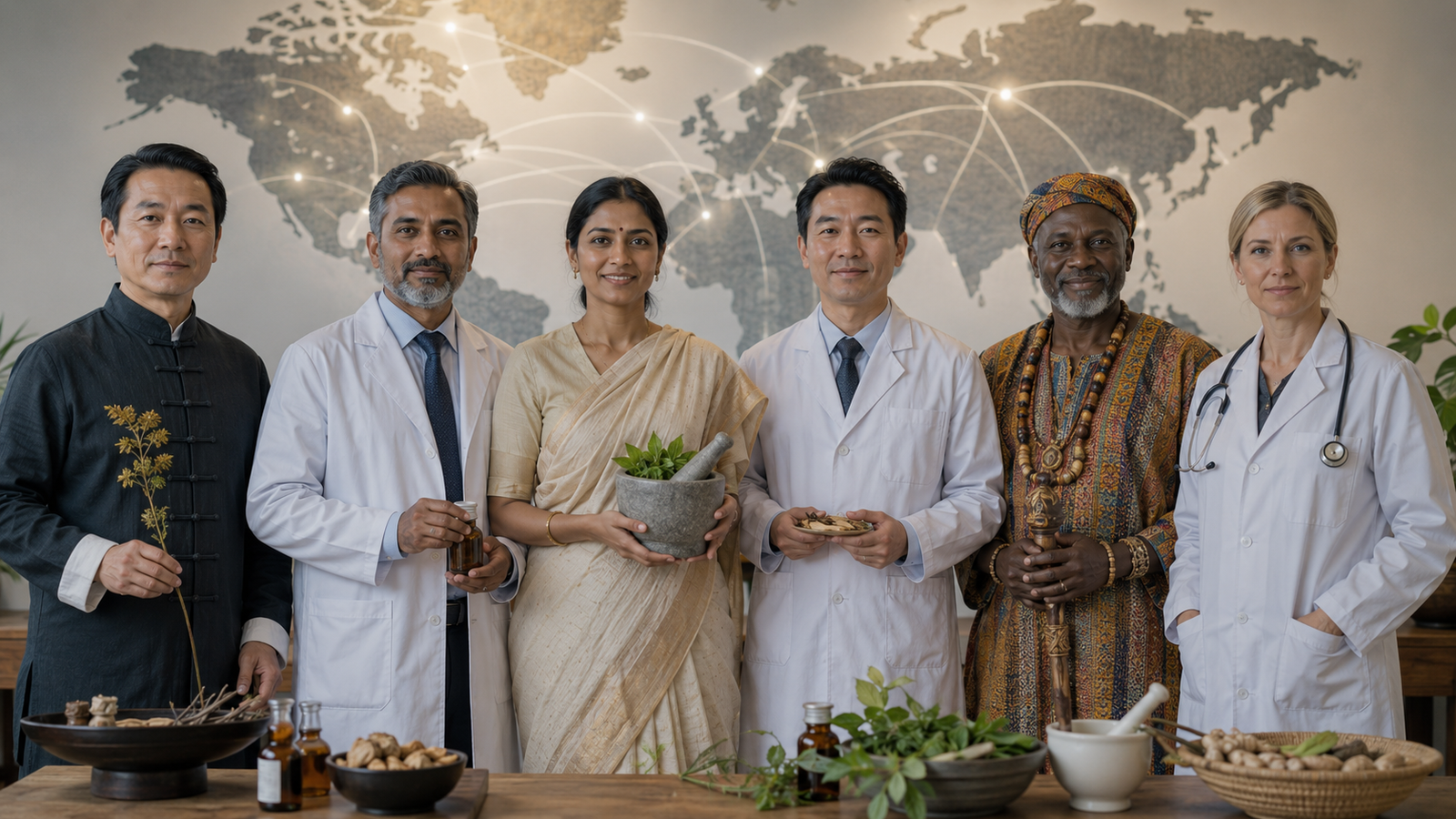
Few healthcare traditions have influenced as many people as Traditional Chinese Medicine (TCM).
Its roots are often traced to the Huangdi Neijing (The Yellow Emperor’s Classic of Medicine), a foundational medical text compiled roughly between the second century BCE and second century CE. Over centuries, Chinese practitioners developed systems of herbal medicine, acupuncture, dietary therapy, massage, and movement practices designed to promote health and restore balance.
Today, Traditional Chinese Medicine remains deeply woven into China’s healthcare system. China maintains thousands of TCM hospitals and clinics, and hundreds of thousands of practitioners continue to practice TCM throughout the country. Acupuncture, one of its best-known therapies, is now practiced in well over 100 countries worldwide and has become one of the most internationally recognized forms of traditional medicine.
To many Western observers, the coexistence of traditional and conventional medicine can seem unusual. To many Chinese patients, it is simply the healthcare environment they have always known.
India: A Culture of Healthcare Choice
India’s healthcare landscape is unusually diverse.
Ayurveda’s written foundations date back more than 2,000 years. Homeopathy arrived in India during the nineteenth century and eventually grew into the world’s largest homeopathic ecosystem. Yoga evolved from an ancient spiritual discipline into a globally recognized approach to physical and mental wellbeing.
India is home to more than 300,000 registered homeopathic practitioners, approximately 200 homeopathic medical colleges, and an estimated 100 million regular homeopathy users. Ayurveda, meanwhile, supports thousands of hospitals, colleges, pharmacies, and research institutions throughout the country.
What makes India distinctive is not any single modality. It is the longstanding acceptance that multiple approaches to health can coexist.
Patients may consult conventional physicians, Ayurvedic practitioners, homeopaths, yoga therapists, or other healthcare professionals depending on their circumstances and preferences. For many Indians, this diversity is simply part of everyday life.
Japan: Tradition Adapted to Modern Medicine
Japan’s traditional medical system, known as Kampo, traces its roots to Chinese medicine introduced more than 1,500 years ago. Over centuries, Japanese physicians adapted these ideas into a distinct medical tradition with its own formulations, diagnostic approaches, and clinical practices.
Unlike many traditional systems around the world, Kampo never disappeared as modern medicine advanced. Instead, it evolved alongside it.
Today, Kampo medicines are taught in Japanese medical schools and prescribed by many conventionally trained physicians. More than 80 percent of Japanese physicians are estimated to prescribe Kampo medicines at least occasionally, and more than 140 Kampo formulas are covered under Japan’s national health insurance system.
Japan offers a fascinating example of a society that chose not to replace one medical tradition with another. Instead, elements of both continue to exist within the same healthcare system.
Southeast Asia: A Meeting Place of Traditions
Healthcare across Southeast Asia reflects centuries of cultural exchange.
Indonesia’s traditional herbal system, known as Jamu, has been practiced for hundreds of years and remains widely used today. Tens of thousands of Jamu products are registered throughout Indonesia, reflecting the enduring popularity of herbal medicine among its population.
Thailand’s traditional medicine incorporates influences from Ayurveda, Buddhism, local herbal traditions, and Chinese medicine. Across Southeast Asia, healthcare has been shaped by indigenous knowledge, trade routes, migration, religion, and colonial history.
Rather than replacing older systems entirely, many societies absorbed new ideas while preserving older ones.
The result is a healthcare landscape that often feels more pluralistic than many Western models.
Latin America: Indigenous Knowledge and Cultural Blending
Healthcare in Latin America reflects one of the world’s most fascinating cultural mixtures.
Long before European colonization, Indigenous civilizations throughout Central and South America developed extensive knowledge of medicinal plants, healing rituals, and community-based approaches to health. Many of these traditions survived and later blended with European herbal medicine, African healing traditions, and modern biomedical practice.
In Peru, traditional healers known as curanderos continue to play important cultural roles in some regions, particularly in the Andes and Amazon. In Mexico, herbal medicine remains deeply rooted in many communities and draws on centuries of Indigenous botanical knowledge.
Brazil has taken a particularly interesting path. In 2006, the country established its National Policy on Integrative and Complementary Practices, incorporating therapies such as acupuncture, homeopathy, herbal medicine, meditation, yoga, and other complementary approaches into parts of its public healthcare system.
What emerged was not a single healthcare tradition but a mosaic of influences layered over centuries. Modern hospitals, Indigenous healing knowledge, herbal medicine, and contemporary public health programs often exist side by side, reflecting the diverse histories of the societies that created them.
Southern Africa: Health as Relationship
One of the most striking differences between healthcare traditions around the world concerns how health itself is defined.
In many parts of Southern Africa, traditional healing systems have historically viewed health not only as a physical condition but also as a relationship involving family, community, ancestry, spirituality, and social harmony.
Traditional healers, often known as sangomas in South Africa, continue to play important cultural and health-related roles for many communities. While modern hospitals and clinics are widespread, traditional healing remains an important source of guidance, support, and cultural continuity.
The World Health Organization has estimated that in some African countries, up to 80 percent of the population relies on traditional medicine for at least part of their primary healthcare needs.
Whether one agrees with every aspect of these traditions is beside the point. What matters is recognizing that different societies often begin with very different assumptions about what health actually means.
Australia: One of the World’s Oldest Healing Traditions
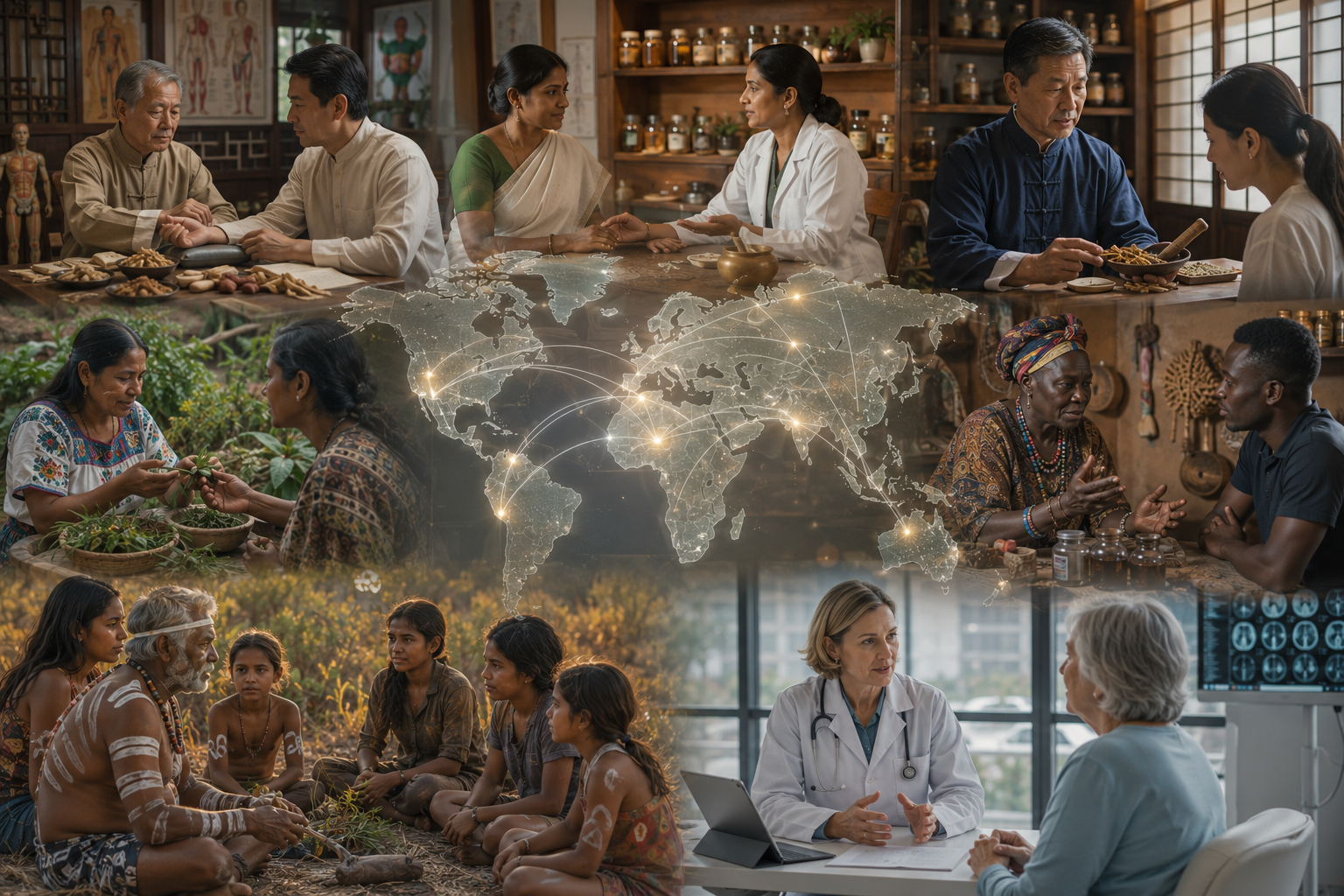
Aboriginal Australian cultures represent one of the oldest continuous cultural traditions on Earth, with histories extending back more than 60,000 years.
Within many Aboriginal traditions, health has never been understood purely as a biological phenomenon. Physical wellbeing is deeply connected to family, community, culture, ancestry, spirituality, and relationship to Country—the ancestral lands with which communities identify.
Health and illness are therefore viewed through a broader lens than physical symptoms alone.
This worldview differs substantially from the biomedical model that became dominant in the West during the nineteenth and twentieth centuries.
Yet it raises an important question: Is health simply the absence of disease, or does it also include our relationships, communities, cultural identity, and connection to the world around us?
Different societies answer that question differently.
The United States: The Age of Specialization
The United States occupies a unique place in global healthcare. American medicine has produced extraordinary achievements in surgery, emergency medicine, pharmaceutical development, diagnostics, and scientific research. Many of the world’s leading medical institutions are located in the United States, and advances developed there have benefited patients around the globe.
At the same time, American healthcare became increasingly specialized throughout the twentieth century. Patients often move between primary care physicians, specialists, surgeons, therapists, and other providers, each focused on a specific area of expertise.This specialization has produced tremendous advances. It has also shaped how many Americans think about healthcare itself.
For someone raised within this system, it can be surprising to discover how differently health is approached elsewhere.
What Global Healthcare Teaches Us
Looking across cultures reveals something important. There has never been a single universal way to think about health. Throughout history, societies have developed different answers to the same questions. What causes illness? What supports healing? What role should the practitioner play? How much responsibility belongs to the individual, the family, the community, or the healthcare system itself? The answers vary remarkably from place to place.
According to the World Health Organization, billions of people worldwide use traditional, complementary, or integrative forms of healthcare as part of their lives. For much of humanity, healthcare has never consisted of a single system. It has been a conversation among many traditions, each shaped by the people and cultures that developed them. No healthcare system has solved every challenge. No tradition has all the answers. Every approach reflects the strengths, limitations, and experiences of the people who created it.
Perhaps the most valuable lesson from looking around the world is not that one system is superior to another. It is that healthcare is far broader, more diverse, and more culturally shaped than many of us realize. Once we recognize that, healthcare becomes less a single story and more an ongoing conversation—one that humanity has been having for thousands of years.
Further Reading & Sources
- World Health Organization (WHO)
- Ministry of AYUSH, Government of India
- Japan Society for Oriental Medicine
- Brazil Ministry of Health
- National Aboriginal Community Controlled Health Organisation (NACCHO)
- Academic publications on Traditional Chinese Medicine, Kampo, Jamu, Ayurveda, and Indigenous health traditions